The Symphony of the Lost
Wyrd bið ful äræd — Fate Always Goes as It Must
1: Golden Morning
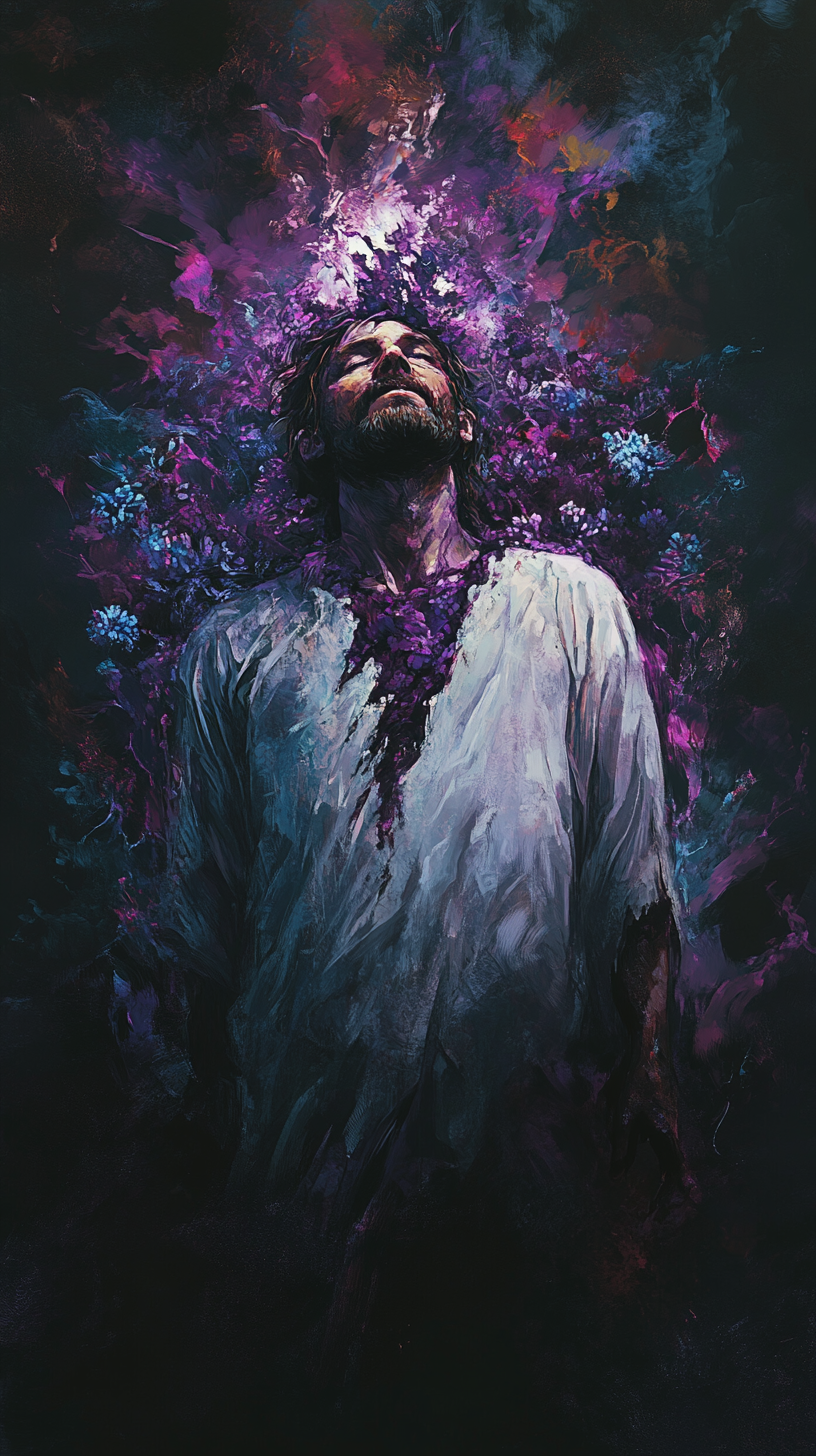
For months, their little cottage was a haven. Sunlight streamed through the windows, warming the worn wooden floors. The garden was a riot of purple and blue—lavender, violets, and forget-me-nots blooming in vibrant clusters. Nikki and Oreo, sleek and black and white, chased each other through the flowerbeds, their mock battles a flurry of paws and gentle hisses. Nikki, ever curious, stalked fat bumblebees near the rose bushes, her tail twitching. Oreo, with impeccable timing, pounced from behind a clay pot and sent them both tumbling into the soft earth.
Inside, the air was always filled with the aroma of Talasia's cooking—roasted vegetables, simmering stews, the occasional rich scent of flaked cod, fried potatoes, and caramelized onions, all seasoned with garlic and herbs. The breeze carried it out through the windows, mingling with salt and jasmine, wrapping the home in memory.
Thot moved through those days content and unhurried. He drank slowly from a chipped mug, letting its warmth settle through him. He watched her in the garden, her hands coaxing life from the soil, her hair catching the sun like strands of spell-thread.
I used to think peace was a ghost, he thought, standing barefoot in the doorway. A morning without a mission. A moment that didn't ache. But here... this was real.
He'd seen too much darkness: too many battles, hollow victories, burnt skies. Talasia had pulled him from the abyss not with spells or force, but with gentleness—with laughter, the way she patched his cloak, the quiet hum beneath her breath, and flour-dusted fingers against dirt-streaked cheeks.
Talasia felt the fullness of those months too. I never thought I could be this happy, she would whisper to the flowers, her sunburned shoulders glowing and her fingers deep in the dirt. Before Thot, there had been only shadows: cold nights, swallowing silence, an ache that clung like a second skin, and fear always waiting behind her breath.
Still, somewhere in the back of her mind, she remembered the God's Breath. A secret. Something she had found before him and never spoken of. It waited there, patient and watchful.
She pushed the knowledge away and focused on the warmth of Thot's hand in hers, the way his laugh broke through silence, and the nights tangled in blankets and candlelight while the waves whispered beyond the window. She poured herself into the present, trying to outrun the tide she knew would return.
Their joy wasn't loud. It lived in shared routines, in the pauses between words, in his off-key humming while he watered the basil, and in the way they curled together by candlelight with the ocean just beyond the window.
It lived in laughter over nothing—her teasing his clumsy folding, his ridiculous songs, the flour she left on his cheek when she kissed him. Love made small. Love made soft. No magic. No war. No gods. Just this.
One morning, she stepped into the doorway where Thot stood, still drowsy after dozing in the hammock. His hair was wild, and a smudge of dirt marked his cheek from helping in the garden. She looked at him with that quiet smile—the one that always seemed to know more than she said.
"How are you feeling?" she asked, voice light but searching.
He drew a deep breath and looked at her as though he were still surprised she was real.
"Much better now that you're here."
Color rose briefly in her cheeks, and she leaned into his chest. They stood like that for a while, the garden rustling around them and the waves rolling beyond.
Later, she rinsed vegetables in a wooden bowl while he lit the fire for dinner. They laughed about nothing. She teased him; he grinned and burned the potatoes again. She kissed the top of his head while the cats lounged on the windowsill and the sun sank into the sea.
That night, they lay tangled in bedsheets that smelled of rosemary and sun. He watched her sleeping face, calm and beautiful. Then he whispered—not to her, not even to himself, but to the stillness around them:
"Much better now that you're here."
The God's Breath was nowhere near them in thought or space. But the next day, the light would change. The plants would begin to wilt a little faster. And Talasia would begin to change.
2: The Shift Begins
The change began so subtly it almost felt merciful.
The mornings grew duller. Sunlight that had once felt golden and kind filtered through a pale silver sky. Nothing was ominous yet; everything was simply muted, as though the earth were holding its breath.
Thot woke one morning to find Talasia already outside. She sat motionless in the garden, still in her nightdress, her hair wild from sleep. The plants moved around her in the wind, but she did not. Her fingers were buried in the soil—not planting or tending, simply resting there.
He watched her from the doorway, barefoot, steam curling from his chipped mug. No birds sang. Even the air seemed still.
"You alright?" he asked softly.
She didn't answer right away. She only gave a slow, vague nod, her face unreadable.
Later that day, she snapped at him over something trivial—the way he chopped the onions. The suddenness startled them both. She laughed too quickly, muttered an apology, and touched his arm as if the gesture could undo it.
Thot tried to smile. He leaned in to kiss her cheek. She leaned toward him, then paused, leaving a narrow space between them.
That night, she cried before sleep. Not loudly. Just a soft, aching sound she tried to smother.
Thot held her close, curling around her like a shield.
"I've got you," he whispered. He repeated it until the words became a lullaby. "I've got you..."
Her body trembled in his arms. Her eyes stayed closed. Eventually, she drifted off first, just like always.
He lay awake beside her, staring at the ceiling. Her face had settled, but tension still pulled at it. A sense of foreboding tightened his stomach, and a warning rose from somewhere deep inside him:
Savor this. These nights won't last.
Then, without warning, she woke. Her eyes were wide and fixed directly on his in the dark.
"Please…" she breathed. "Please don't give up on me."
He froze.
He answered, his voice unsteady:
"I will never give up on you. Never. Go back to sleep, sweet girl. Please."
At once, her body softened and her breathing deepened, as though she had never woken at all.
But Thot couldn't forget the way she'd said it. She'd said it before. This time felt different: desperate, almost final.
Something in his bones whispered:
That would be the last time she asked.
3: The Disappearance
The plants in the garden began to wilt, slowly and unevenly. Talasia didn't seem to notice. Or maybe she just didn't want to.
She planted new seeds, but they never sprouted. The waves grew louder. The wind changed direction.
And then… She stopped singing.
She always sang while she worked—in the garden, at the stove, in the bath. Little melodies, half-remembered and ancient. They used to fill the cottage like morning sun.
Without her songs, the cottage felt emptier.
Thot noticed, but said nothing. He simply watched her withdraw as the unspoken tension gathered between them.
Day by day, her warmth gave way to brittle unease.
One evening, he found her staring into the fire, her eyes distant and unfocused.
"What's wrong?" he asked quietly.
She flinched, startled, her gaze snapping to his. "Nothing," she said, too quickly. "Just thinking."
When he reached for her, she pulled away.
"Don't," she snapped. "Just... leave me alone."
Thot's patience finally snapped. "That's it." His voice was low and unsteady.
"I've been watching you fade away, Talasia. The nightmares. The silence. The secrets. What is happening?"
Power stirred in the air around him, though he held most of it back.
Talasia recoiled, and he saw fear in her eyes—fear of him. He had never seen it there before.
"You wouldn't understand," she whispered. "It's not safe."
"Safe?" His voice broke. "Talasia, nowhere is safer than with me. But you have to trust me. You have to tell me."
He stepped closer, anger giving way to a plea. "Come to me. Let me protect you."
She stared at him, torn between her fear and her trust in him. Then, with a sob, she collapsed into his arms.
"I'm so scared," she whispered into his chest. "I don't know what's happening."
He held her tight and knew something was coming. Something terrible.
But he would face it. For her. Always for her.
That night, he slept deeply. And woke to silence.
Not quiet—silence. No wind. No waves. No insects. No birds.
He blinked and sat up, his heart pounding in the sudden stillness. Then he realized something. It had been a long time since he'd heard birdsong. A long time since he'd seen a fox in the brush, or heard frogs by the well.
Then another thought struck him. Where was Oreo? Where was Nikki?
Where was Talasia?
The bed beside him was empty. Cold.
He threw the blanket aside and stumbled out of the house, calling her name into the thick, unmoving air. There was no answer, only the sound of his own breath, far too loud in a world that had gone utterly still.
He ran. Into the trees. Down the shore. Through the overgrown trails where their laughter once lived. The world felt vacant, emptied of life.
The wind whipped Talasia's hair around her face as she stood at the cliff's edge. The vial of Breath glowed faintly in her hand, casting an eerie light on her pale skin.
Below, the waves hammered the rocks with a low, hungry thunder. She swayed slightly, her eyes fixed on the swirling water. A cold, ancient voice seemed to whisper in her ear, promising release. Promising quiet.
"Talasia!"
Thot's voice cut through the wind. He sprinted toward her, panic plain on his face.
"What are you doing?"
She flinched and turned slowly to face him. "I... I just needed air," she said, her voice and hands both trembling.
"Air?" Thot's voice broke with disbelief. "You're scaring me, Talasia. What's going on?"
She looked away, her eyes glassy with tears. "I don't know," she whispered. "It feels like something is calling me. I can't name it, but it feels as if it's always been there."
His anger gave way to fear. He stepped forward slowly.
"Come here," he said, gentle but firm.
He took the vial from her hand and pulled her against him. "You're not alone," he murmured. "I'm here, and I'm not leaving."
Talasia clung to him, shaking. The wind howled around them, but for a moment she let herself believe him.
For the next week, life returned to something close to normal. They found their old rhythm again. The fear from the cliff remained, but it no longer stood between them.
Thot loved her more fiercely after that. He surprised her with news of a trip to her city, the place she still called home and spoke of with such fondness. The excitement in her eyes as he described the arrangements warmed him more than any fire.
They spent hours poring over maps and scribbled notes, laughing as they traced imagined roads side by side. For a while, the shadow receded. In its place were golden mornings, gentle hands, and the dream of a journey.
Even while they planned, part of Thot remained watchful. He kept one promise to himself:
I won't let her slip away again.
4: The Monster
Thot woke to a heavy silence. The cottage felt wrong. The air was close and still, the kind of stillness that raised the hair on his arms. And worse...
Talasia wasn't beside him.
His hand reached instinctively for her warmth and found only cold sheets. Panic struck. He stumbled from bed, calling her name. Every room was empty.
He burst outside. The garden was dead. The basil, mint, and moonfern had crumbled to dust. The flowers she had sung to hung black and shriveled. His breath caught. He ran barefoot to the cliffside, the place where they had shared so many sunrises and where she went when the world felt heavy. The ocean below roared in the dark. But she wasn't there—only wind and an empty ledge.
Terror clutched him. Where was she?
He turned back toward the cottage. Then he saw a figure standing motionless in the clearing near the path.
"Talasia?" Relief surged through him, but it faded as he drew closer. The light touched her face, and his heart stopped. It was her. Almost.
Her face was only slightly wrong, as if its features had softened and reset imperfectly. The smile was hers. So was the familiar tilt of her head. Her eyes were not. They glowed amber-gold, bright and rotten.
"Talasia?" he whispered, hope dying on his lips. She turned too quickly and smiled. It was the same sweet smile, spoiled now. "Why did you leave me?" she hissed in a voice that was rough and wrong.
He staggered back. The air pulsed with a presence that did not belong there.
Then it lunged—a blur of claws, teeth, and shadow. He barely dodged, its claws cutting through the space where he had stood. Purple magic burst from his palms and struck its chest. It did not flinch. It grinned and moved with graceful, deadly rhythm, like Talasia in the kitchen if every familiar motion had been turned toward slaughter.
Thot fought desperately. Bolts of light and thunderous blows tore through the clearing, but the creature danced around him, mocking him and drawing out the kill. Every strike drained him. His magic flickered. Then he understood: it was feeding on his love, his guilt, and the ache beneath them. His knees buckled, but he stayed upright. He had to.
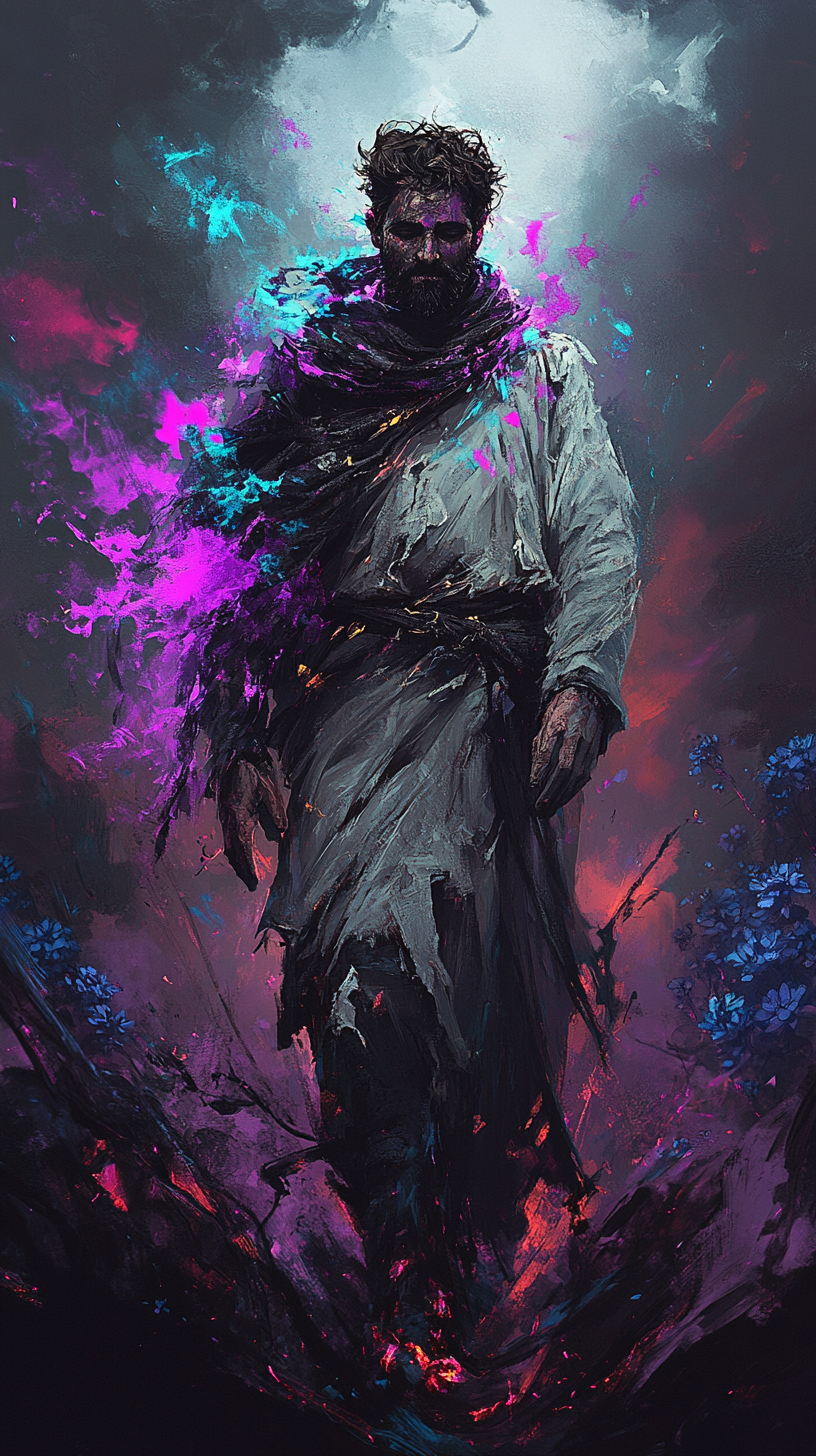
He reached deeper, into the part of himself the gods had warned him never to touch. Power answered—untamed, furious, almost holy. His veins blazed. His skin burned violet and crimson. His breath became lightning. He became the storm.
The creature paused when it sensed the change. Too late. Thot screamed and released everything. Violet magic laced with crimson erupted from him. Trees splintered, the sky wailed, and the ground cracked open beneath them.
The creature howled as its form flickered and melted, the illusion burning away. Its face shifted, and a dozen Talasias seemed to scream from within it before fading.
When the storm died, only ashes remained.
But the pressure in the air remained. Thot turned as the real monster dropped from the trees. Its long limbs bent at impossible angles, and its flesh pulsed like an open wound. Its face was hers: the cheekbones, the jawline, the amber eyes. But everything behind them was twisted and dead.
He froze. "No... no, no—" It struck with crushing force, throwing him back hard enough to crack his ribs. He hit the ground, his vision spinning, but rage pulled him upright. He fought as though the last thing he loved had been stolen. Stone shattered. Trees tore apart. He roared with every blow, and the creature laughed. "Why didn't you save me?" "Why did you let me rot?" "I LOVED YOU!" He answered with magic instead of words. A pulse of incandescent grief burst from him. He seized the creature and held it close as violet runes rose around them like arches of lightning, forming words in a language even he did not know. Crimson power streamed from his arms, rage made visible. He poured everything into it—magic, grief, fear, and love. The creature screamed. Flesh peeled away. Shadows shrieked. Its voice, her voice, tore through the air until the force of his magic broke it apart. Then there was silence.
Thot stood over the remains, his chest heaving, as a sickly sweet smell filled the air. The creature's flesh bubbled and melted into thick black liquid that hissed against the ground. Grass withered beneath it. Within moments, nothing remained but a dark, smoking stain. Then fear cut through him. "Talasia!" he roared, turning toward the house and running as fast as his bare feet could carry him.
5: The Return & Rending
Inside. She was there. Kneeling on the floor.
The God's Breath rested in her hands, glowing dimly like a fading star.
Her eyes met his, and for one shattered second she was herself again. Not twisted. Not broken. Just Talasia. His Talasia.
"Talasia, no!" he pleaded.
She offered no explanation.
She only looked at him with oceans in her eyes and said, "I'm so sorry... for everything."
Then she whispered, like a vow sealed in blood and light: "It is written. Maktub."
She inhaled the Breath.
The world tore open.
The room bent—walls cracking like eggshells, the floor rippling like disturbed water. The fabric of reality itself split down the middle, threads of light unraveling in the air like divine silk caught in a hurricane.
Her body trembled—not with pain, but with the joy of becoming. Her veins glowed gold. Her bones shimmered beneath her skin. Her hair lifted as if caught in the breath of a god.
And then—she began to come undone.
Her fingers unraveled into threads of light. Her chest blossomed into radiant ribbons.
Thot fell to his knees, sobbing. Purple tears streamed down his face—bright, luminous with raw power and agony.
"Please," he begged, voice barely a whisper. "Please don't go."
Her face remained the longest, still staring at him. Her eyes held him in place. He could not move or scream. He could only watch.
She smiled. It was soft. It was tragic.
And then—she was gone. The last of her became light.
The world convulsed. The floor liquefied into a vortex of shadow and fractured starlight. Cracks spread across the walls, revealing nebulae and impossible geometries. The last trace of her light scattered into stars.
From the space where her heart had been, a small heart-shaped stone fell to the floor, vibrant purple-blue.
Reality screamed. The air cracked with raw, unleashed energy.
Thot's purple tears fell in silence. He saw the vial, a trace of light still swirling inside it. With shaking hands, he snatched it and inhaled what remained.
And the universe shattered.
A symphony of destruction and rebirth. His senses exploded. Time ruptured. His body came apart, every atom screaming in agony. His soul fractured, and something within it was torn away and cast into the void. He was pulled through the cosmos at an impossible speed, like a trillion miles an hour through the blood vessels of God.
He saw everything. The birth and death of stars. The endless dance of galaxies. Fleeting glimpses of Talasia across countless realities.
Moments splintered and multiplied. He saw her laughter echoing in a thousand different rooms. Her tears falling in a million different worlds.
He saw Drogo and his family, their silent cheers echoing through the void. He saw himself—broken, whole, reborn.
He faced something too vast to name, a presence that seemed to hold galaxies within it and sorrow beyond measure.
"Why?" he asked, though no words could exist in this place.
And it answered—not in words, but in truth.
Don't be afraid. Love is the only thing worth breaking for.
Then it ended as violently as it had begun. He was back.
But not whole.
He lay amidst the ruins of the home they built together. Silent. His body intact. His mind, lost.
He did not move. His chest rose and fell faintly. He was alive, but unreachable.
In his hand, the stone. Beside him, the empty vial.
And the world around him, silent once more.
6: The Aftermath
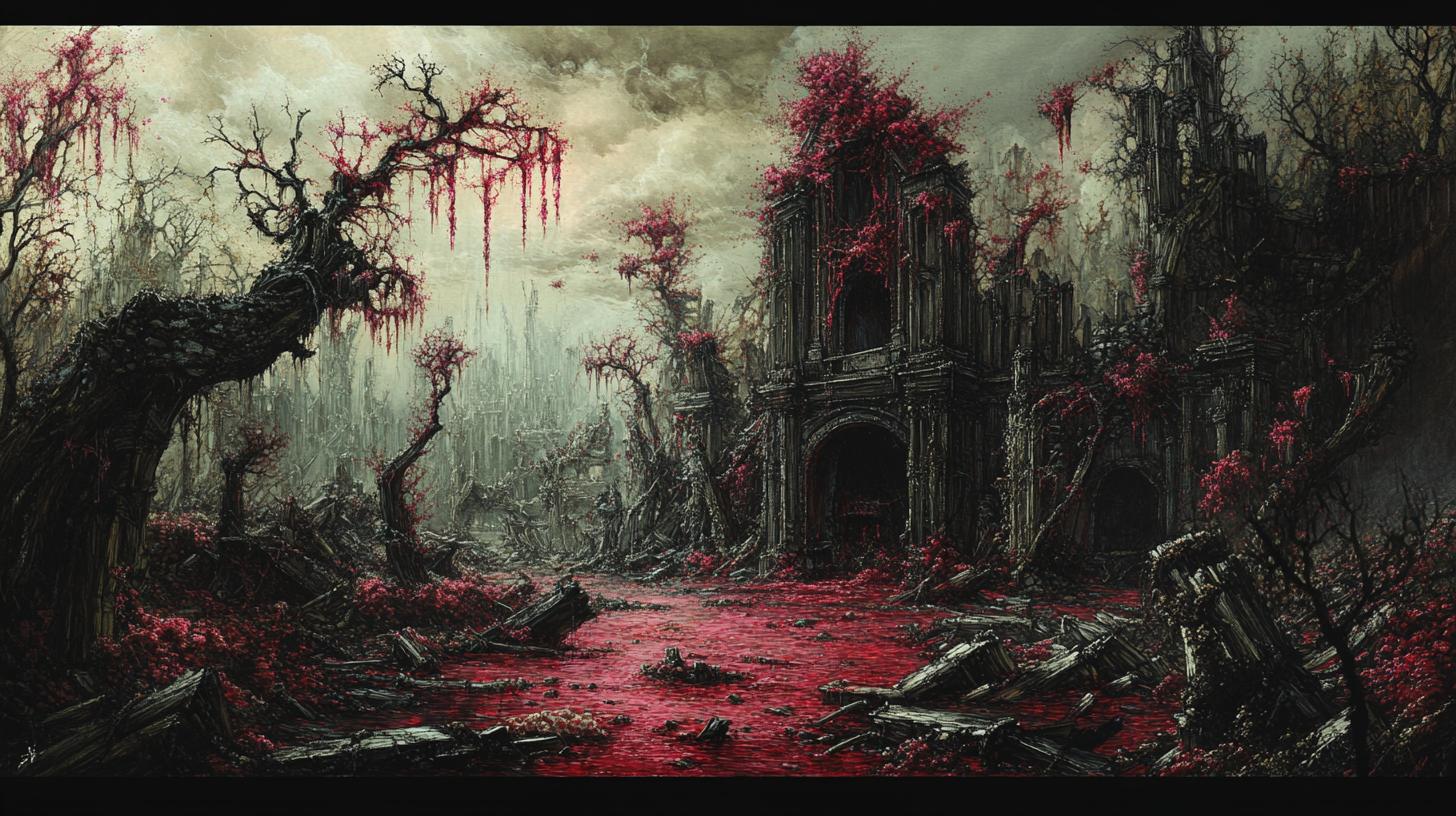
The sky never truly brightened again above the ruined house. Smoke still drifted from the broken beams, and the scent of scorched reality lingered in the air.
That's when they arrived.
His father and stepmother arrived, drawn by the echoes of violence beyond nature and the pull of something ancient and wrong. The once-vibrant garden had become a field of withered stalks and blackened petals. Lifeless vines clung to the cottage walls, though the structure itself remained unburned—a chilling sign of the strange magic that had torn through the place.
They found the wreckage: the broken earth, the shattered light. And him—alone.
There was no sign of Talasia. No whisper of her name on the wind. Nothing but a boy in a man's body, curled around a stone.
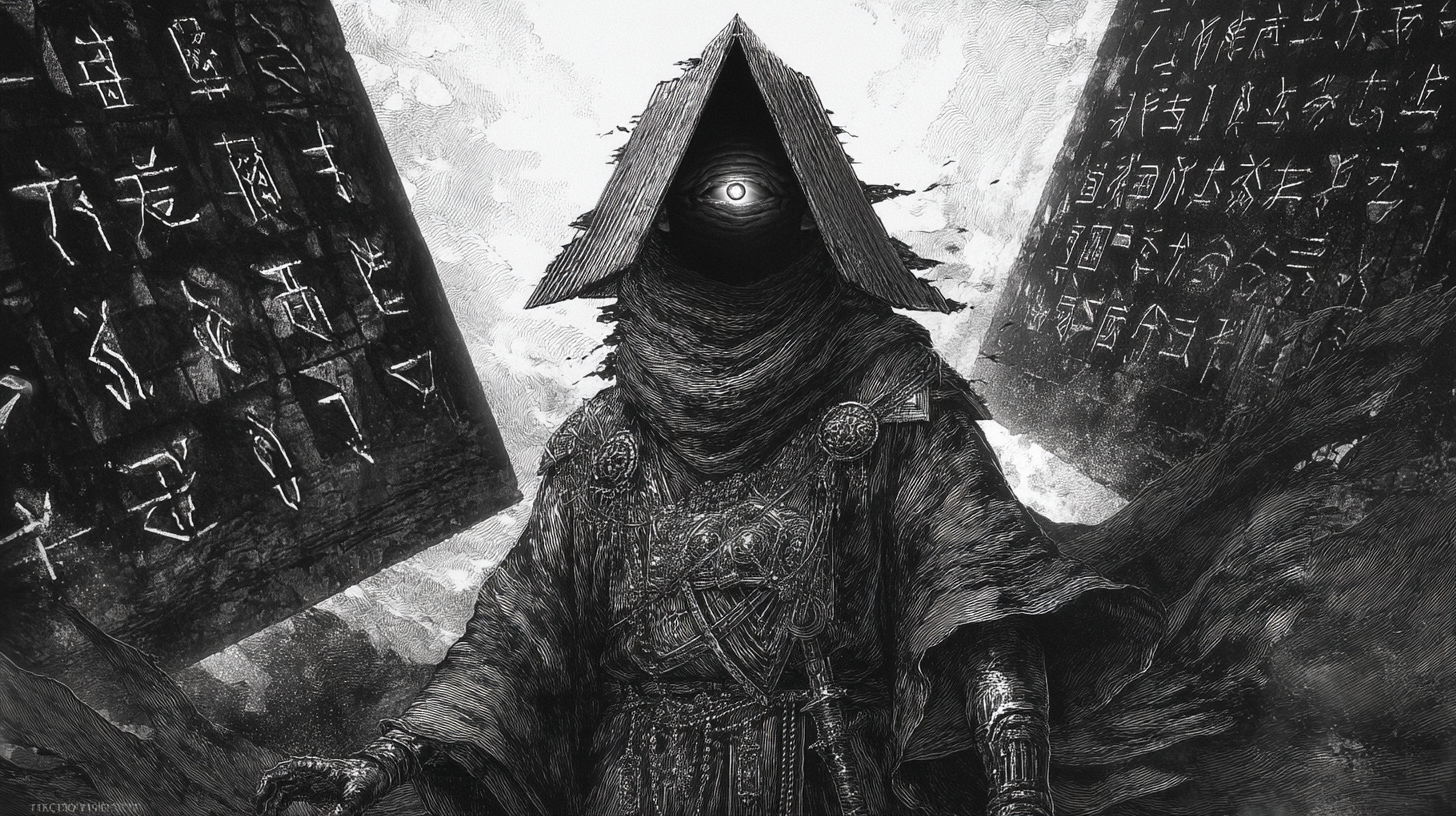
The places where his eyes had been were smooth and sealed. A third eye, vivid purple, glowed on his brow even as he lay still. His father and stepmother exchanged a look of quiet dread.
His father, a skilled healer, began casting at once. When nothing restored the missing eyes, his stepmother wrapped a strip of cloth around his head and tucked him gently into the old family quilt. They did not ask what had happened. They only knew he needed to be safe.
They carried him from the rubble. Carefully. Reverently. His father held him like he did when he was small.
They brought him home—to the house where he had grown up and the room where he had once dreamed. Faded posters still hung on the walls. The bed looked too small. They laid him down and waited.
His old room offered little rest. He tossed and turned, haunted by Talasia's unraveling and the cosmic journey that followed. Though he never fully woke, her name became a constant whisper on his lips, a desperate plea against the visions.
His nightmares held something vast, black, and endless: a shadow that devoured stars and swallowed every trace of light and hope.
They cared for him day and night, tending to his body and singing softly even when he did not stir, always hoping he would wake. Deep inside the stillness, something ancient was awakening.
And it remembered everything.
The Ruins
Thirty days passed in silence and fever dreams. Then his third eye snapped open, wide and filled with something terrible and knowing. He did not speak. He moved.
He jolted upright and tore away the sheets. His stepmother gasped and called his name, begging him to stop.
But he was already on his feet, stumbling down the hall, out the door, into the wild and into the past. He ran. He ran back to the place where he had last seen her, the only place that might still carry her echo.
As he neared the cottage, the familiar landscape began to twist. The smell of decay hung in the air, a silent rot that made his skin crawl. It was a sickness in the land itself, and it sank into his bones before he reached the door.
He stumbled over the broken threshold, the stone clutched in his palm and his breath ragged. The air inside was suffocating.
The rot had returned. No—it never left.
It pulsed in the corners, slick and putrid, as if the house itself was weeping.
Then clarity struck him—terrible and absolute.
He saw it, not with ordinary sight, but with something beyond it. The rot was more than mold or decay. It was a wound in the soul of the world. It hummed. It breathed. It tried to whisper to him.
He reeled and collapsed to the floor, retching onto the cracked boards.
Then he reached up—instinctively—and felt it. A cloth. Rough. Tied tightly around his head.
He had not noticed the cloth—not during the panic, the grief, or the fury. He had not realized his ordinary eyes were gone.
His fingers trembled. He untied it. There was nothing underneath. No eyes. Only smooth, pale skin, scarred over as if years had passed.
He gasped, but still he saw. Clearer than ever.
The rot glowed. The cracks in reality shimmered. The stone in his hand pulsed with a color he had no name for.
He was no longer seeing with ordinary eyes. He was seeing with truth.
His third eye was not merely open. It was awake. Merciless.
And the world had never looked so broken.
The rot writhed across the walls, the earth, and the bones of the place. He dropped to his knees and vomited again. It was not simple decay; it was violation, a wrongness sunk deep into the fabric of existence.
He passed the place where he had fought the creature. No body remained—only a pool of pinkish sludge surrounded by a nauseating brown haze.
Everywhere he looked, the ruin deepened. Oreo and Nikki were gone. The flowers were dead. The cabin was broken open.
Then the stone warmed in his hand. He stood where Talasia had unraveled. Its pulse quickened against his palm. He opened his hand.
The warmth kept time with his heartbeat. Within the stone's purple-blue depths, he saw a glimmer, then a shimmer.
The number three.
Just for a breath. Then gone.
But he had seen it.
He knew. The stone held a part of her, a piece of her essence that remained.
He stumbled toward the beach. Toward the place she loved most. The waves crashed in front of him like a dirge. He sat there for a long time, holding the stone, his thoughts shattered.
Only then did the full truth settle over him. His eyes were truly gone, yet the world remained visible.
How can I see? The question came and went. What mattered was the truth beneath it.
He was changed. Fractured. Utterly lost.
A voice came from behind him. His father.
He turned and ran to him, tears already in his throat.
"Where is she? What happened to her? Why isn't she here?!"
His father looked confused. Concerned. He let Thot rant for a moment before answering.
"I don't know who you're talking about, son. I'm worried about you. Are you alright?"
Thot stared at him. Silence. The ground seemed to shift beneath him.
"No," he whispered. "No, no, no—she's real. She's real, Dad. She's real."
His certainty wavered, and panic began to close around his chest. His hands shook. His breath quickened.
And for one blinding instant— He questioned everything. Had he imagined her? Had grief built her from loneliness and need? Was she only a shape his sorrow had given a name? A fever dream born from trauma?
Was he mad?
No. No.
But still—what if?
He clenched the stone until it hurt, felt its pulse match his own, and pressed it to his forehead as he sobbed.
"She was real," he choked. "She is real. I held her. I bled for her. I saw her unravel. I heard her say 'Maktub.'"
His father could only stare at him, confused and helpless.
In that moment, Thot had never felt so alone.
His hand moved to the smooth skin above his cheeks.
"What about my eyes? Where are they? Why can I still see?" His voice broke. "I can see," he repeated. "But where are my eyes?"
His father stepped closer and cupped his face gently. "I don't know," he said. "Your stepmother and I don't know what happened to them either. I don't have any answers for you, son. I'm sorry."
Thot opened his mouth to protest, then stopped. The worry in his father's face softened something in him. Thot forced himself to breathe.
Maybe there were no answers here. Not yet.
On the way home, he couldn't stop talking about Talasia. His father told him he'd been saying her name in his sleep. But neither he nor his stepmother knew who she was. No one did.
No one remembered. No one but him.
They didn't understand the rot. They treated it like a delusion. They looked at him like he was sick.
He understood then: they would never understand.
But the stone pulsed again. And Thot knew.
He was the only one who remembered. The only one who still saw the truth.
He turned toward the distant horizon. His expression hardened. His heart was ruined, but it was not dead.
"I'm going to find her."
And he walked. Away from the rot. Away from the ruin. Toward the truth. Toward Aemina.
Toward her.